The Digital Forensics Conference USA 2026 was hosted by George Mason University (GMU), and included in-person attendees from Europe, India, and Korea as well as the Americas. Over 30 attendees joined virtually. Pre-conference workshops included digital forensic techniques for crimes against children led by Project VIC International featuring CASE/UCO, analyzing iPhone logs by Hexordia, root-case analysis of IoT vulnerabilities, drone forensics, and cross-domain artifact correlation.
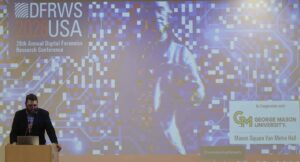
Two keynote speakers provided practitioner perspectives and prioritized areas where more research and knowledge sharing is needed. Brian Nunamaker, Lab Director of the DEA Digital Evidence Laboratory, shared his broad experience delivering digital forensics capabilities in the lab and the field. He highlighted the challenges of handling complex cases, rapidly changing technologies such as drones, as well as resurrection of knowledge when old technologies are part of an investigation. Strategic use of cloud services must balance capability, security, and cost. Justin Grover, Lead for Digital Forensics, the MITRE Corporation discussed the challenges of translating research into practice and called for engaging practitioner perspectives in R&D, tools that make use of cyber domain ontologies without exposing users to complexity, and knowledge sharing.
The technical program was very strong, combining practical solutions and research impact across multiple specializations, including investigating sex crimes, analyzing memory and malware, reconstructing smartglasses and AI usage, and studying surveillance and body cameras.
The best overall paper was awarded to Hala Ali, Andrew Case, and Irfan Ahmed for “Memory Forensics Techniques for Automated Detection and Analysis of Go Malware.”
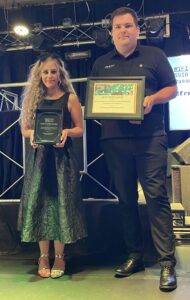
The best student paper was awarded to Abdus Satter, Makei Salmon, Lara Muhanna, Trevor Spinosa, Taha Gharaibeh, and Ibrahim Baggili for “With or Without Logs: Reconstructing Model Context Protocol Activity from Volatile Memory.” The papers and presentations are all open access and available here: https://dfrws.org/usa-2026-program/
NIST presented the Digital Forensics Artifact Catalog, with CASE/UCO categorization, and invited everyone to submit their knowledge, which some authors already have completed: https://artcat.nist.gov/
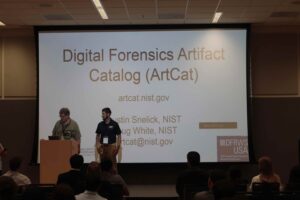
The poster session kicked off with a motivating oral overview of each one to encourage attendees to visit the posters.

The panel discussion on “Using Digital Investigation to Identify and Safeguard Children from Sexual Exploitation and Abuse” was intense, providing many insights into challenges and R&D opportunities.
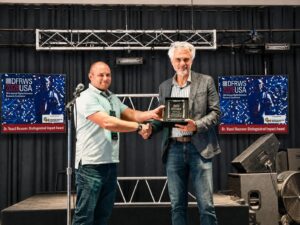
Lively discussions and social activities continued into the evenings, including the banquet, Forensic Rodeo CTF competition, and DFRWS 2026 Distinguished Impact Award presented to Vassil Roussev:
The capstone event of the conference was an interactive session on practitioner perspectives on making AI defensible in digital forensics casework. The outcomes of this session are being written up for broader dissemination.
This conference successfully manifested the DFRWS.org vision of fostering transdisciplinary approaches to address emerging challenges in digital forensics by bringing together innovative researchers, developers, and practitioners from around the globe.